
RHEO AI Smart Operational Platform helps major industrial manufacturers to improve Employee Satisfaction and Reduce Overtime Cost.
- ABSTRACT
A division of a one of the top residential Windows and Doors manufacturing conglomerate was experiencing excessive labor overtime in their insulated glass (IG) assembly process, resulting in low Employee Satisfaction, high Employee Turnover, and increasing Labor Cost. To rapidly turn-around this undesired situation, the business needed to quickly understand the root causes impacting the work center capacity and disproportionate overtime hours.


THE OVERVIEW
- Employee satisfaction was rapidly declining due to excessive overtime requirements to compensate for the lack of efficient and effective work-cell performance.
- Management relied on tribal knowledge and experience to drive process improvements.
SCENARIO
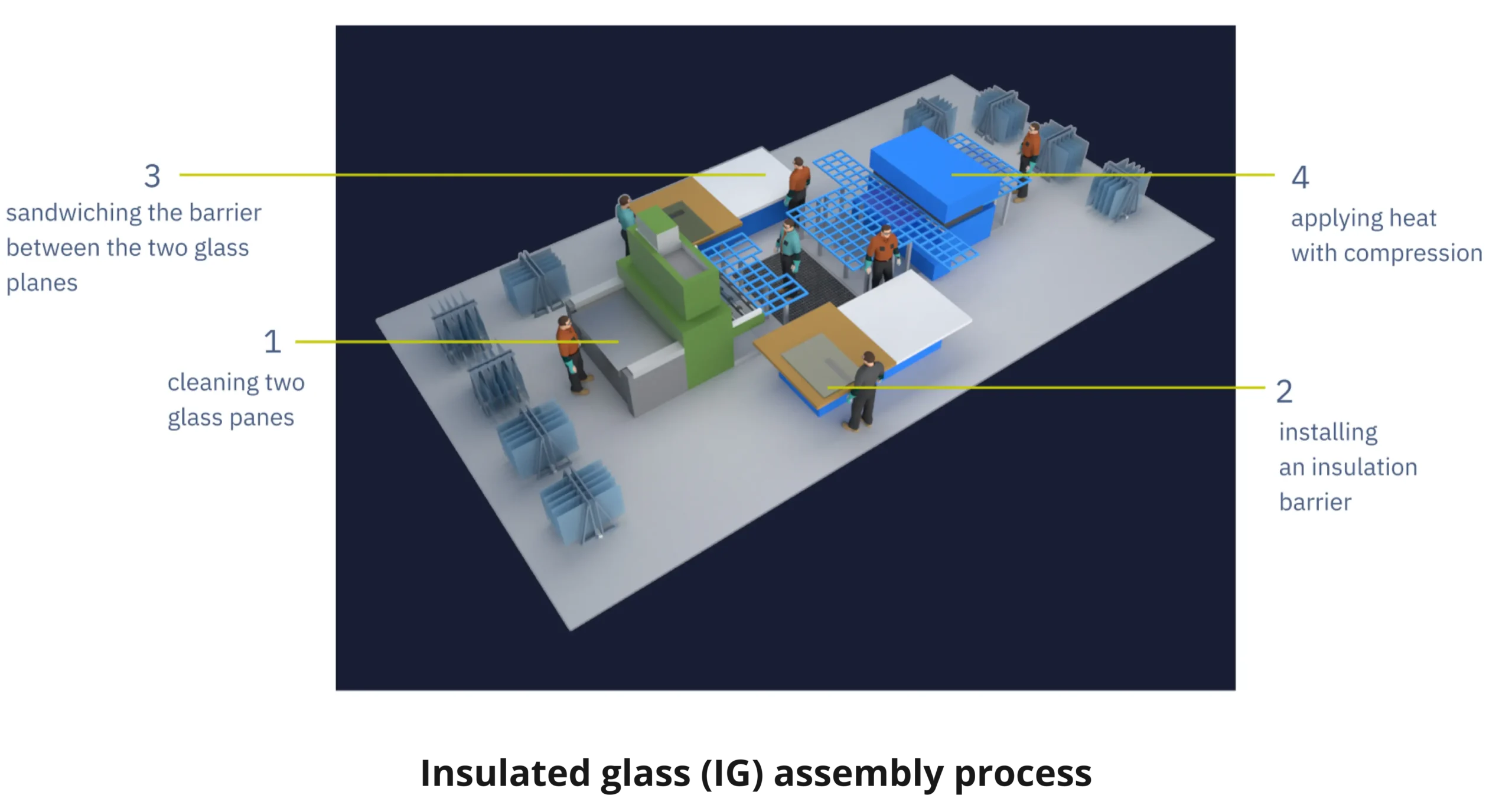
The insulated glass (IG) assembly process consists of four (4) primary operational steps. These steps include:
1. Cleaning two glass panes
2. Installing an insulation barrier
3. Sandwiching the barrier between the two glass planes
4. Applying heat with compression
2. Installing an insulation barrier
3. Sandwiching the barrier between the two glass planes
4. Applying heat with compression
Since homes have a variety of window and door sizes, the manufacturing processes must be setup to simultaneously run mixed model sizes. The processes must be highly synchronized in order to flow together at the exact time to assemble the final product.
THE CHALLENGE
- Time Studies generate only sample data and hence missed vital information and variations
- Time studies tend to bias against the cumulative effects of the ‘insignificant few’ root causes
An IG assembly area essentially supplies glass to all final product assembly lines and hence is typically the bottleneck in the overall product assembly process. As a consequence, upstream delays due to material shortages, resource deficiencies and unplanned downtime, causes capacity constraints on the entire assembly line. This in-turn affects customer satisfaction levels (due to delayed product shipment) and employee satisfaction levels (due to excessive demand for over-time hours).
THE SOLUTION
- Rheo provided process owners with prioritized improvement insights.
- Rheo empowered process owners with the knowledge to manage and drive improvements.
RHEO AI Smart Operational Platform was deployed to automate data collection, analysis and process visualization. The system with its ability to continuously monitor was able to measure and account each and every inefficiency incidence, including those that typically get deemed to be insignificant. As a consequence of the inherent continuous and exhaustive nature of the RHEO platform to identify root causes, the platform was able to recognize the effect of lack of steady supply of glass upstream in the process, leading to a re-allocation of resources, thereby improving the Units Per Worker Hour (UPWH) dramatically.
THE RESULTS
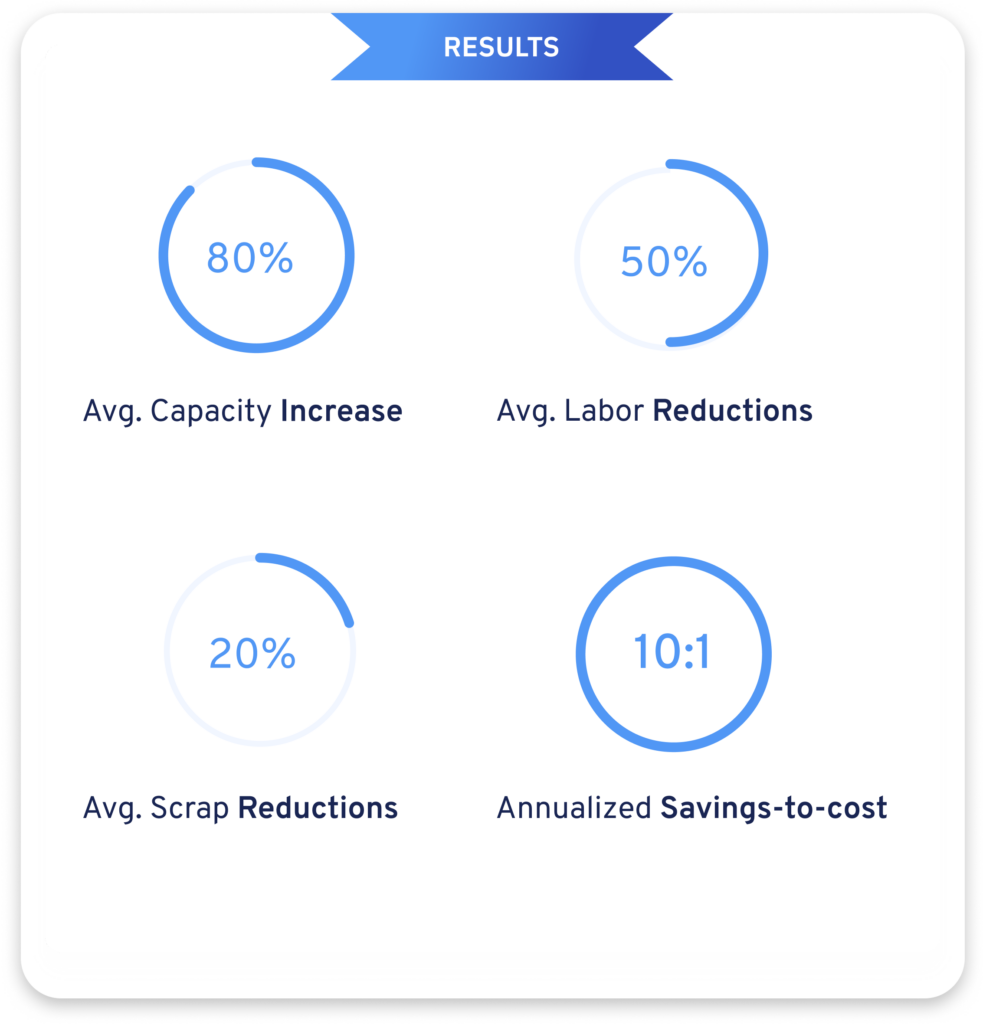
The pilot which lasted for a month, identified the following benefits:
- Management – Improved productivity resulted in Six Figure EBITDA labor savings of across two lines.
- Employees – Need for overtime was significantly reduced. Performance-based bonuses compensated for the overtime work loss resulting in increased Team morale (increased pay and improved work life balance).
- Customer – On-time customer delivery was consistently achieved without undue effort and additional planning.